Sausage & Cabbage Skillet (One‑Pan, Low‑Carb, 20 Minutes)

Why This Skillet Works
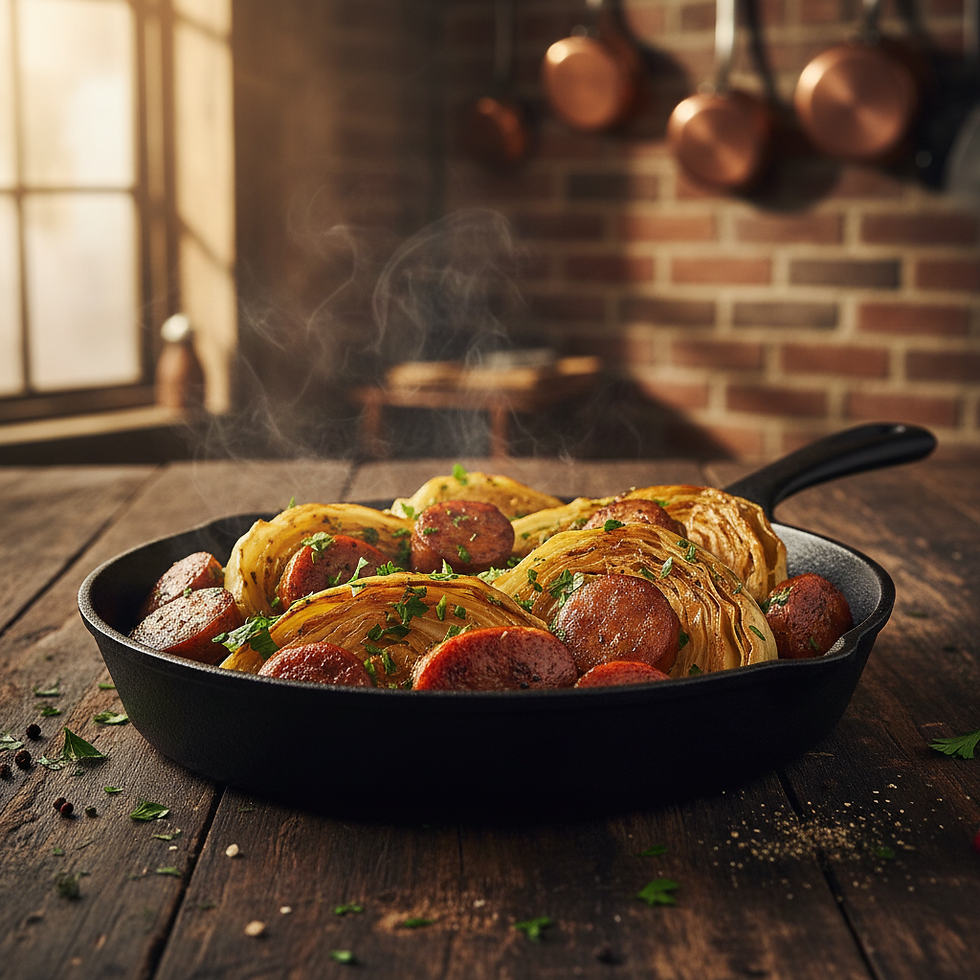
One pan. Thirty minutes. Almost zero cleanup. This sausage and cabbage skillet earns its place in your weekly rotation because it delivers real, satisfying flavor without any of the usual effort. Smoked sausage brings bold, savory depth while cabbage soaks up the drippings and turns sweet and tender as it cooks. The result is a meal that tastes like it took far longer than it did.
It also holds up across diets. Naturally low in carbs (around 6–7g net carbs per serving), high in protein, and easy on the grocery budget, it works whether you are eating keto, feeding a crowd, or just trying to get dinner on the table fast.
Ingredients
Serves 4 · Ready in ~30 minutes
The Essentials
400g (14 oz) smoked kielbasa or andouille sausage, sliced into ⅓-inch rounds
½ medium green cabbage, cut into 1-inch squares (about 6 cups)
1 medium yellow onion, thinly sliced
3 garlic cloves, minced
1 tbsp olive oil or butter
For Flavor
1 tbsp apple cider vinegar
1 tsp smoked paprika
½ tsp black pepper
Salt to taste
Fresh parsley to finish (optional)
How to Make It
Sear the sausage. Heat a large 12-inch skillet over medium-high heat. Add the sausage slices in a single layer and cook for 2–3 minutes per side until deeply browned. Remove and set aside.
Build the base. In the same pan, add a little oil if needed, then sauté the onion for 3–4 minutes until soft and golden. Add the garlic and cook for 30 seconds until fragrant.
Cook the cabbage. Add the cabbage to the pan and toss to coat in the drippings. Sprinkle with smoked paprika, black pepper, and a pinch of salt. Cook over medium-high heat for 6–8 minutes, stirring occasionally, until the cabbage is tender with some caramelized edges.
Deglaze and finish. Splash in the apple cider vinegar and scrape up any browned bits from the bottom of the pan. Return the sausage to the skillet and toss everything together for 1–2 minutes to warm through.
Serve. Taste, adjust seasoning, and scatter fresh parsley on top. Serve straight from the pan.
Tips for the Best Result
Don't crowd the pan
A packed skillet traps steam and turns cabbage soggy. Use the largest pan you own, or cook the cabbage in two batches. High heat and space are what give you those caramelized, golden edges.
Cut cabbage into chunks, not shreds
Fine shreds break down quickly and can turn mushy. Cutting cabbage into 1-inch squares keeps the texture firm and lets the pieces hold their shape as they cook.
Sear the sausage separately
Removing the sausage after browning and adding it back at the end keeps it from going rubbery. You also leave behind a layer of flavorful fond in the pan that seasons everything else.
Swap in turkey or chicken sausage
Going with a leaner sausage cuts the calorie count to around 160–200 kcal per serving. The technique stays exactly the same. Just watch the heat a little more closely, since leaner sausage can dry out faster.
Make it creamy
For a richer version, stir in 3–4 tablespoons of heavy cream at the end and let it bubble for a minute. It turns the pan juices into a light, silky sauce that coats every piece.
Nutrition (Per Serving)
Based on kielbasa sausage. Values are estimates.
Nutrient | Per Serving | Nutrient | Per Serving |
|---|---|---|---|
Calories | ~280 kcal | Net Carbs | ~6–7g |
Protein | ~10g | Fiber | ~2–3g |
Total Fat | ~22g | Sodium | ~720mg |
Serving Ideas
This skillet is filling enough on its own, but it pairs well with a few simple sides if you want to stretch it further:
Crusty sourdough bread to mop up the pan juices
Steamed rice or egg noodles for a heartier plate
A simple green salad to balance the richness
Dijon mustard on the side for a sharp, tangy contrast
Leftovers keep well in the fridge for up to 3 days and reheat beautifully in a skillet over medium heat. The flavors actually deepen overnight, making it one of those rare meals that tastes better the next day.


Comments